What to Do When a Suicide Happens
Unfortunately, in spite of the best efforts of many, suicide happens. This leaves surviving loved ones to navigate a confusing and difficult aftermath.
If you are coming to this resource through the Bio-One website, it is likely you are in the very recent aftermath of a loved one’s death and are unsure of what should happen next.

This section will cover topics pertaining to your loved one’s remains, belongings and the physical scene of their suicide.
If these details have already been taken care of or if the specifics are too difficult for you to think about right now, please skip to the next section.




Do not try to clean up the scene yourself. Any blood or fluids left behind after a death are a biohazard.
Attempting to do the cleanup yourself can be dangerous and deeply traumatic.
Homeowners insurance will usually cover cleanup costs, which can relieve one potential burden.
We have all the equipment and expertise needed for the job, and we will treat the scene, the situation, and any belongings with respect and care.
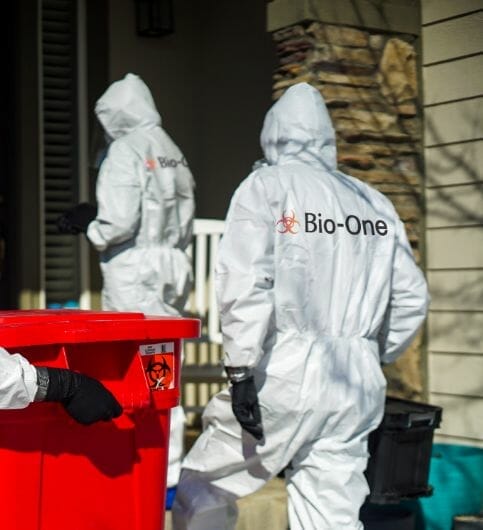
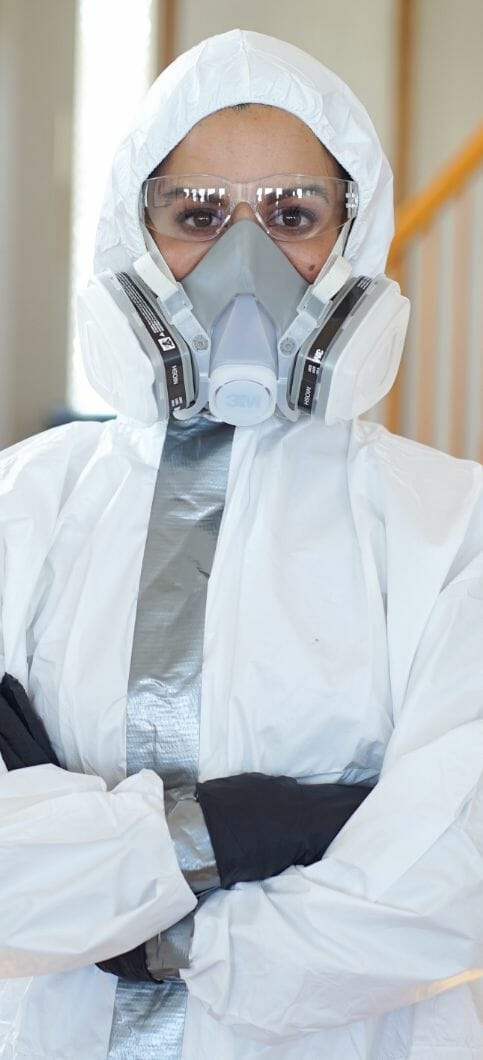
What Is Involved in a Suicide Scene Cleanup?
At Bio-One we recognize that it can be an important part of the grieving process for some people to know exactly what is involved in cleaning up the scene.
How Do I Know if I Need Professional Help?
Any unattended death generally requires some level of cleanup.
The intensity of the cleaning required depends on how the person died and how soon after death their body was discovered.
The nature of death and decomposition makes it so that cleaning up after a suicide is rarely an easy job. Blood and body fluids can quickly seep into furniture, carpet, and floorboards, causing massive damage as they putrefy.
It’s also important to know that bio-matter involved can be dangerous for anyone without personal protective equipment.
These situations require specialized deep cleaning and disinfection to remove all traces of fluids, soiled fabrics, bloodborne pathogens and odors to make the area safe for habitation again.
Professional Help That Cares for You
At the same time, we are acutely aware that this cleanup is coming in the wake of incredible personal tragedy.
While it’s important that the job be thorough, it also must be handled with as much care as possible toward the scene and any of the victim’s affected belongings.
Inspection
The cleaning itself begins with a thorough inspection of the scene to assess:
- What supplies will be needed
- How much material will need to be removed
- The extent of any damage cause by decomposition
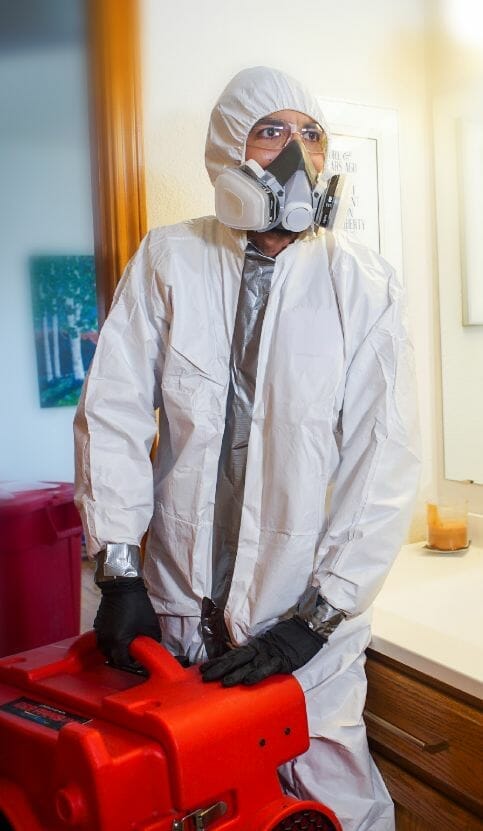
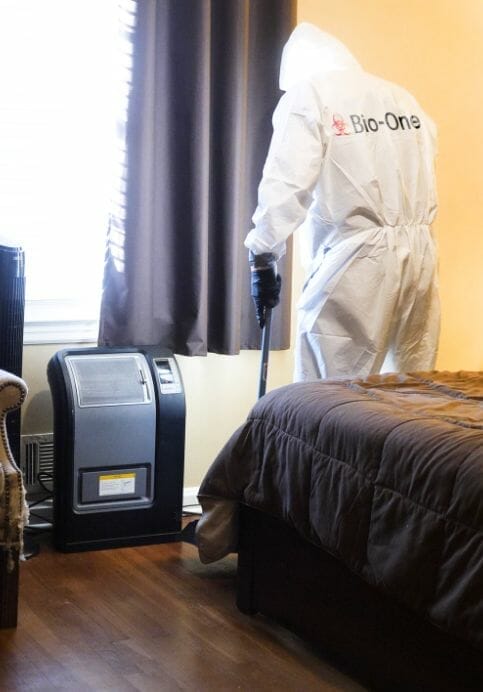
Bio-Matter Disinfection and Disposal
The next step is to clean and dispose of any visible blood, body fluids, and compromised porous items.
This stage can sometimes involve removing sections of:
- Soiled carpeting
- Floorboards
- Baseboards
- Other household items
This is to ensure that no hazardous material is left behind.
Personal Belongings
We will take care at this time to preserve any personal items that can be safely cleaned.
Porous materials like clothing and stuffed animals cannot be truly disinfected, but upon request we will clean them to the best of our ability and return them to the family.
Restoration Prep
Once everything has been thoroughly cleaned and disinfected, we take care to get everything to a point where we can hand it off to contractors for restoration work.
We will handle filing the claims with your insurance company to make sure the remediation process is underway.
We are there with our clients through every step of the process to make sure they are not left in the dark about anything that is happening to their loved one’s property or belongings.


Use Social Media As a Tool
Consider informing everyone else with a social media post. This will help mitigate some of the emotional drain of telling loved ones about the news.
This post can be succinct. Whatever you have the capacity to say is fine for now, as long as you get the news out to the people who need to know about it.
Focus on what’s immediately important and return later when you have more emotional capacity.


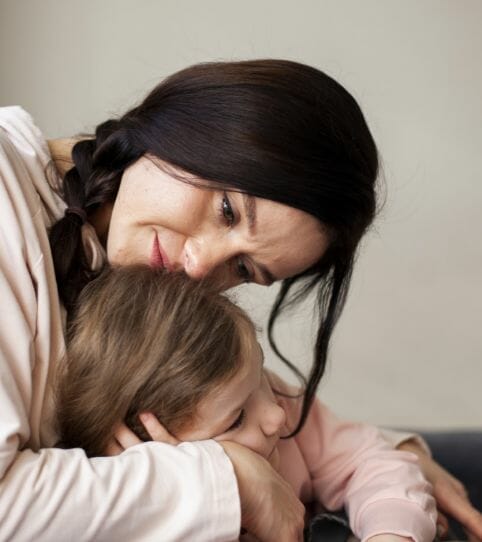
How to Tell Children
There may be young children in the immediate or extended family who will need to be told.
If this is your responsibility, wait until you have taken care of your own emotional needs before reaching out.
You should be at a point where you can be calm enough to tell them in an appropriate way.
Be sure to explain it in a way that is appropriate to their age, avoiding focus on the act itself, and prepare to answer any questions they have in a similar manner.
Assure them that they are not at fault, especially if the victim was a parent or caretaker.
After, encourage them to express how they are feeling with you.
Let them know that it is okay if they need to cry or be angry, and that you are there for them in whatever they need.

Memorial & Burial
With the logistics of the direct aftermath out of the way, the last step is to make sure there is some sort of memorial for the victim.
Even if they wouldn't want a funeral, it’s extremely important for anyone experiencing grief to have an opportunity to honor and say goodbye to their loved one.
Most funeral homes will be able to help coordinate a memorial service appropriate for the culture and wishes of the deceased, though some families prefer to do the preparation and memorial themselves.
The time leading up to the memorial and burial can be hectic, so it’s difficult to allow yourself time to process.